
Why Do We Have Leap Years?
லீப் ஆண்டு ஏன் வருகிறது?
A year is not exactly 365 days. Leap years are how the calendar stays in step with the seasons.

Most years have 365 days, but every fourth year has 366, with an extra day, 29 February, added to the shortest month. Why do we need it?
A year is a little longer than 365 days
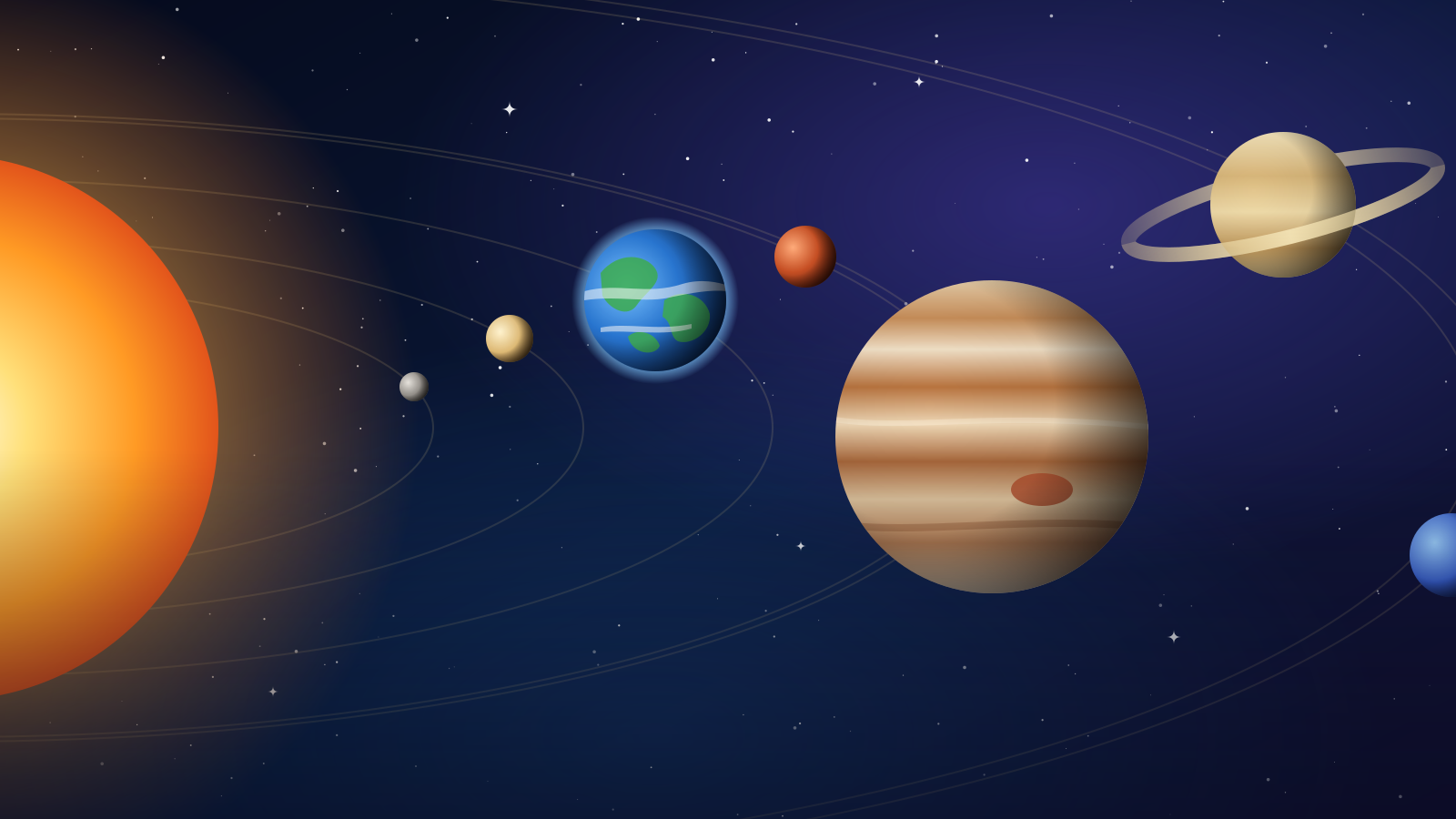
The Earth takes about 365 and a quarter days to travel once around the Sun. Our calendar has a whole number of days in each year, so it would fall behind the seasons by about a quarter of a day every year. After four years, it would be out by nearly a whole day. After a century, it would be out of step by around three and a half weeks, and festivals and seasons would slowly drift across the calendar.
The leap day
The fix is simple: add a leap day roughly every four years to catch up. Years such as 2024 and 2028 are leap years.
A rule that fixes a small error
A year is actually a little shorter than 365 and a quarter days, so adding a day every four years is slightly too much. To correct for that, the calendar we use today, the Gregorian calendar, has a rule. A year is a leap year if it can be divided by 4, except for century years, such as 1900 and 2100, which are leap years only if they can also be divided by 400. So 2000 was a leap year, but 1900 was not.
A short history
The Roman leader Julius Caesar introduced a leap year every four years in 45 BCE. In 1582, Pope Gregory XIII introduced the refinement that skips some century years, giving us the calendar used across most of the world today.
Other calendars
Calendars based on the Moon face a similar problem. Many traditional Indian calendars that follow both the Moon and the Sun add an extra month every few years to keep festivals in their proper season.
Key points
- The Earth takes slightly less than 365 and a quarter days to orbit the Sun.
- Leap days stop the calendar drifting away from the seasons.
- A year that divides by 4 is a leap year, except for most century years.
- Many traditional Indian calendars add an extra month instead.