
Bitcoin & Crypto
பிட்காயின் & கிரிப்டோ
A plain-language introduction to Bitcoin and other cryptocurrencies: what they are, how they work in outline, and why they carry real risks.

Bitcoin is the best-known cryptocurrency, a form of digital money that exists only on computers and the internet. Many other cryptocurrencies exist. This guide explains the basic ideas, and why such assets are considered risky.
What Bitcoin is
Bitcoin was introduced in 2009. Unlike rupees or dollars, it is not issued by any government or bank. Instead, it runs on a network of computers that follow shared rules.
The ledger
Every Bitcoin transaction is recorded in a public record called a blockchain, which is copied across many computers. Because many copies must agree, it is hard for any one person to change the record.
Limited supply
Bitcoin’s rules limit the total number that can ever be created to 21 million. Some people see this as a strength, but a limited supply does not guarantee that the price will rise.
Why the price moves so much
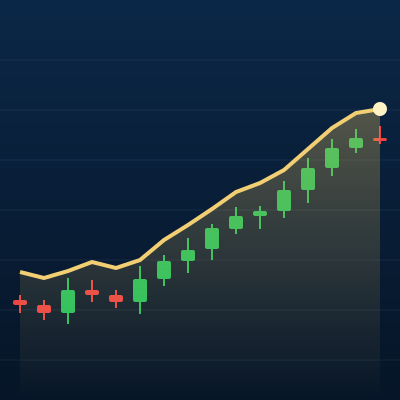
Bitcoin’s price is set by what people are willing to pay for it. It is not tied to a company’s profit or to a physical object, so sentiment, news and regulation can move it sharply. Large rises and falls over short periods are common.
Risks to understand
- The price can fall sharply and may not recover.
- If you lose the private key or password to your wallet, your holdings may be lost for good, with no one to recover them for you.
- Scams are common in the crypto world, including fake schemes that promise guaranteed returns.
- Rules and tax treatment can change. In India, crypto is subject to specific tax rules and regulatory attention, so check the current position.
Key points
- Bitcoin is digital money that no government or bank issues.
- Transactions are recorded on a shared public ledger called a blockchain.
- Its price is very volatile and rests on what people will pay.
- Crypto carries risks of loss, lost access and scams.
Finance content is for education only and is not investment advice. Market figures are labelled when they are samples.